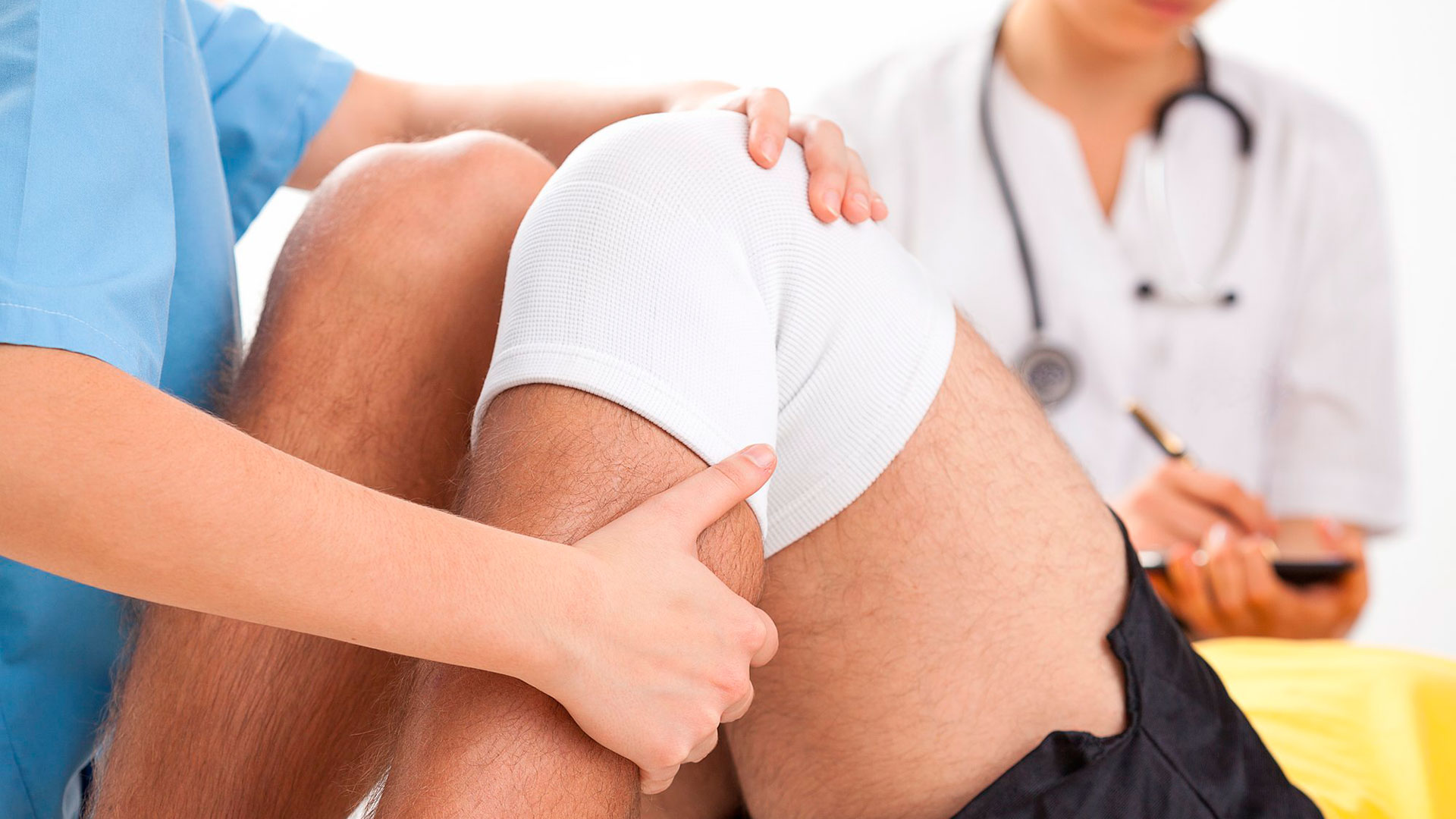
KNEE LIGAMENT INJURIES: CAUSES, DIAGNOSIS AND TREATMENT
The ligaments of the knee are essential for its stability. They are strong structures that connect the bones and allow controlled movement of the joint. In the knee, we distinguish two main types of ligaments:
- Cruciate ligamentsLocated in the center of the knee, they control anteroposterior stability.
- Lateral ligamentsLocated on the sides of the knee, they provide stability against external forces.
Injuries to these ligaments occur due to trauma, sudden twists or direct impacts, and are common in athletes.
01.- Cruciate Ligament Injuries
Mechanism of injury
The injuries of anterior cruciate ligament (ACL) These injuries commonly occur in sports that require changes of direction, sharp turns, or landings after a jump (soccer, skiing, basketball). A typical example is when the knee twists inward while the foot remains stationary.
He posterior cruciate ligament (PCL) It is injured less frequently and is usually due to direct trauma to the front of the knee, such as hitting the dashboard in a traffic accident.
Symptoms
- Audible popping sound at the time of injury (especially in the ACL).
- Feeling of instability or “failure” when walking.
- Immediate inflammation and pain.
- Difficulty supporting weight.
Diagnosis
The diagnosis is made through physical examination (Lachman test for ACL, posterior drawer test for PCL) and imaging tests such as the magnetic resonance imaging, which allows visualization of the degree of breakage.
Anterior Cruciate Ligament (ACL) Treatment
Not all ACL injuries require surgery. If the patient It does not exhibit instability. In their daily life or sports practice, treatment can be conservative with physiotherapy and muscle strengthening.
In cases of persistent instabilitySurgery is recommended, especially in young people and athletes, since without the ACL the knee can suffer more wear and tear and increase the risk of osteoarthritis.
- ACL repairIt is possible in some very recent cases and in young patients, but not always viable.
- ACL reconstructionThe torn ligament is replaced with a graft, which can be:
- Autograft (from the patient): taken from the patellar tendon (bone-tendon-bone), the hamstrings, or the quadriceps tendon. Recommended for young people and athletes.
- Allograft (from tissue bank): in selected cases, such as elderly people or revision surgeries.
Treatment of the Posterior Cruciate Ligament (PCL)
Isolated PCL injuries are usually treated in a conservative manner Treatment involves immobilization, physical therapy, and muscle strengthening. Surgery is reserved for cases with significant instability or combined injuries.
02.- Lateral Ligament Injuries
Mechanism of injury
- Medial lateral ligament (MCL): It is injured by a blow to the outer side of the knee or twisting movements.
- Lateral lateral ligament (LCL): It usually breaks due to an impact on the inner side of the knee or hyperextension, and the injury is usually more serious.
Symptoms
- Pain on the side of the knee.
- Localized inflammation.
- Feeling of instability.
Diagnosis
Clinical examination and magnetic resonance imaging allow the severity of the injury to be determined.
Treatment
- Medial Collateral Ligament (MCL) InjuryIt tends to heal well naturally, so treatment is usually conservative with partial immobilization, physiotherapy and muscle strengthening.
- Lateral Collateral Ligament (LCL) InjuryIn many cases, surgery is required, as this ligament does not heal well on its own.
How to improve recovery? Regenerative Medicine and Rehabilitation
To promote a better recovery from ligament injuries, the following is recommended:
- Regenerative medicine: platelet-rich plasma (PRP) or hyaluronic acid injections to improve ligament healing.
- Physiotherapy and rehabilitationMuscle strengthening and proprioception programs to restore knee stability.
Dr. Narváez Clinic’s Approach
Do you have a ligament injury? Request a consultation
If you have suffered a knee injury, early evaluation is crucial to choose the best treatment and avoid future complications.. Book your appointment and regain stability in your knee.