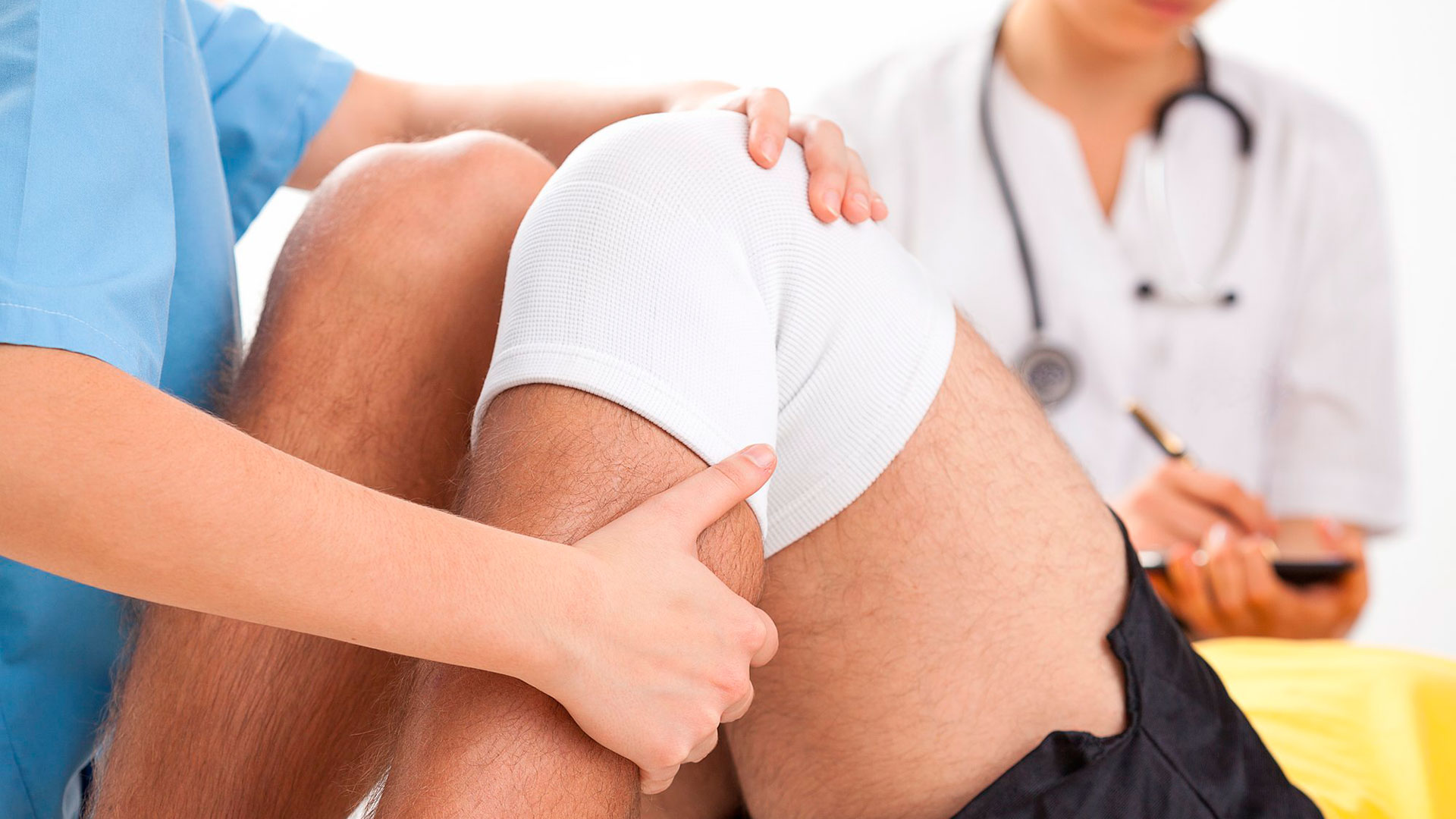
KNEE PATHOLOGY: DIAGNOSIS AND TREATMENT
o1.- Introduction to the Knee Joint
The knee is the largest joint in the body and one of the most complex. It is formed by three main bones: the femur, the tibia, and the patella. Its stability depends on a combination of bony, ligamentous, and muscular structures. It functions as a modified hinge, allowing flexion and extension, as well as a slight degree of rotation.
The main anatomical elements include:
- Menisci: fibrocartilaginous structures that cushion loads and stabilize the knee.
- Ligaments: the anterior cruciate ligament (ACL), posterior cruciate ligament (PCL), medial collateral ligament (MCL) and lateral collateral ligament (LCL).
- Articular cartilage: covers bone surfaces to allow frictionless sliding.
- Muscles and tendons: such as the quadriceps and patellar tendon, essential for mobility and stability.
02.- Classification of Knee Pathology
We can differentiate between non-degenerative pathology and degenerative pathologydepending on the cause and type of injury.
- Non-Degenerative Pathology
These are injuries that occur due to trauma, overloads or acute injury mechanisms, and mostly affect young people or athletes.
- Meniscal Injuries
- Internal meniscus
- Lateral meniscus
- Ligament Injuries
- Anterior Cruciate Ligament (ACL): partial or complete breakage, instability.
- Posterior Cruciate Ligament (PCL): less frequent, but crucial for subsequent stability.
- Collateral ligaments (LCM and LCL): affect medial and lateral stability.
- Cartilage Injuries
- Chondropathies and chondromalacia patellae.
- Cartilage lesions in the femur and ibia
- Osteochondritis dissecans.
- Degenerative Pathology
It refers to progressive diseases that mainly affect older adults and that lead to a deterioration of the articular cartilage.
- Knee Osteoarthritis (Gonarthrosis)
Dr. Narváez Clinic’s Approach
Do you have knee pain? Request a consultation
If you suffer persistent pain or limited mobilityWe can help you find the most suitable treatment for your case.