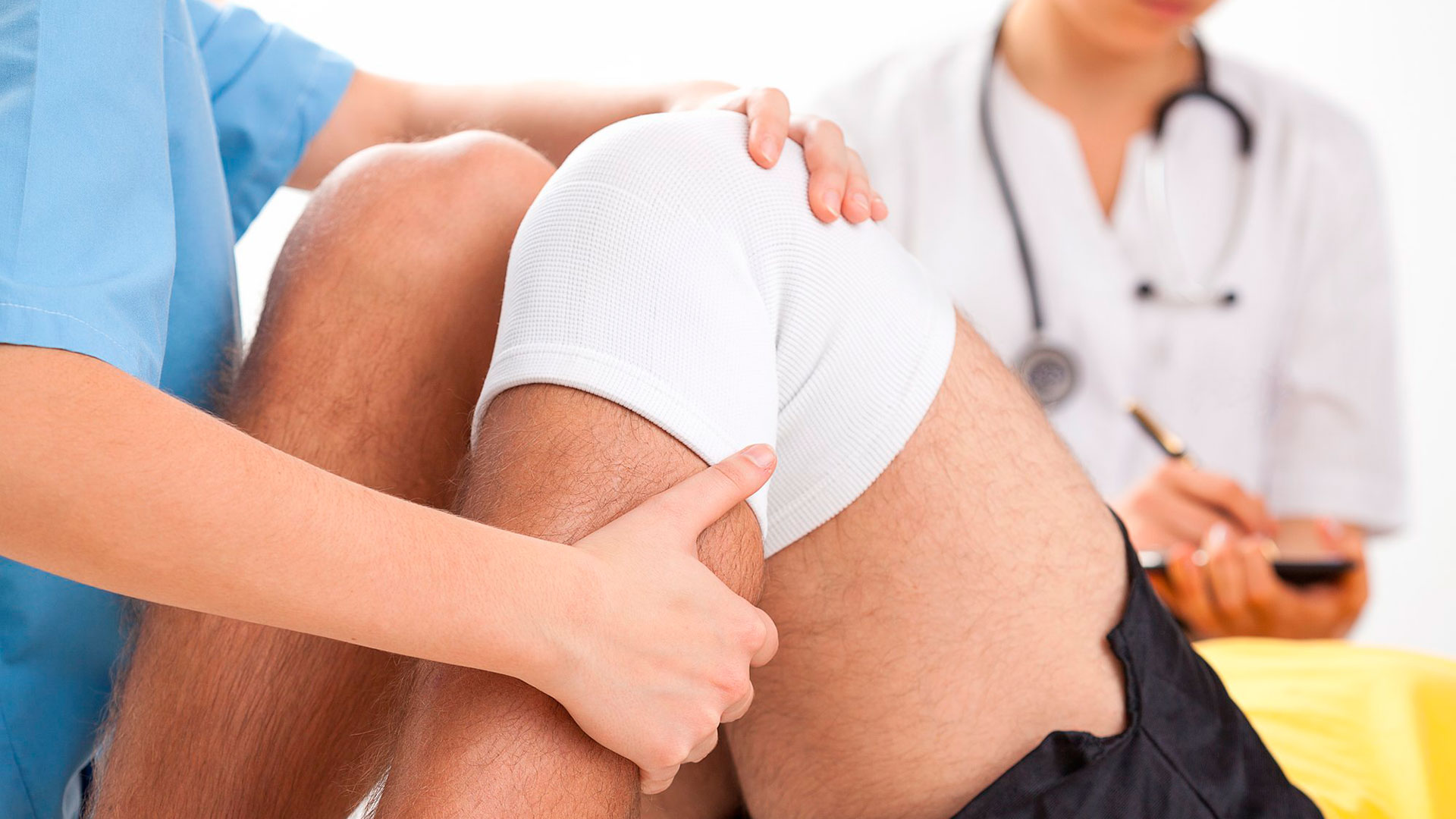
KNEE CARTILAGE INJURIES: DIAGNOSIS AND TREATMENT
What is cartilage and what is its function in the knee?
Articular cartilage is a smooth, tough tissue that covers the ends of the bones in the knee, allowing for smooth, frictionless movement. Its main function is absorb impacts and distribute loadspreventing bone loss.
Unlike other tissues, cartilage It has no blood vesselsThis makes regeneration difficult in case of injury. If the damage is not treated promptly, it can progress to osteoarthritis, causing pain and functional limitations.
Types of Cartilage Injuries
Cartilage injuries can vary in depth and sizeKey factors in determining treatment. According to the classification of OuterbridgeThey are divided into:
- Grade I: softening of the cartilage without visible fissures.
- Grade II: small surface cracks without affecting the deep layer.
- Grade III: deep fissures that reach the subchondral bone.
- Grade IV: total loss of cartilage with bone exposure (osteochondral lesion).
Size of the injury:
- Small (<2 cm²)They can respond to minimally invasive treatments.
- Medium (2-4 cm²)They require regeneration or repair techniques.
- Large (>4 cm²)They may need cartilage transplants or osteochondral grafts.
Treatment Options According to Type of Injury
01.- Conservative Treatments
They are recommended for minor injuries or when there is no bone exposure.
Regenerative medicine:
- Platelet-Rich Plasma (PRP) either hyaluronic acid to improve cartilage quality and reduce inflammation.
- Growth factors to stimulate repair.
Arthroscopic debridement:
- Unstable fragments of cartilage are removed to relieve symptoms.
- Indicated for small injuries or in patients who are not candidates for major surgery.
02.- Reparative Treatments
When the injury is deeper, but of moderate size, techniques can be applied to stimulate cartilage regeneration:
Microfractures: small perforations in the underlying bone to stimulate the formation of reparative tissue.
- Indicated for small lesions (<2 cm²) in young patients.
- It generates fibrocartilage, which is less resistant than the original cartilage.
Mosaicplasty (Autologous osteochondral graft):
- Cylinders of healthy cartilage are taken from another area of the knee and implanted in the lesion.
- Useful for focal defects of 2 to 4 cm².
- Better results in localized injuries and in active patients.
03.- Advanced Regenerative Treatments
In more extensive injuries, innovative therapies are used that aim to regenerate cartilage with higher quality:
Chondrocyte culture (Autologous chondrocyte implantation – ACI/MACI)
- Cells are extracted from healthy cartilage, cultured in the laboratory, and then implanted into the lesion.
- Indicated for medium to large lesions (>2 cm²) in young patients.
- It can be combined with biological membranes to improve integration.
Fresh osteochondral grafts
- Cartilage and bone fragments from donors are used to replace damaged areas.
- Indicated for large osteochondral defects (>4 cm²).
- More complex technique, but with promising results in severe cases.
Dr. Narváez Clinic’s Approach
What is the best treatment for my injury?
The ideal treatment will depend on the depth and size of the injuryin addition to individual factors such as age, activity level and symptoms.
If you have persistent knee pain, early diagnosis is crucial to prevent further damage and preserve joint function.